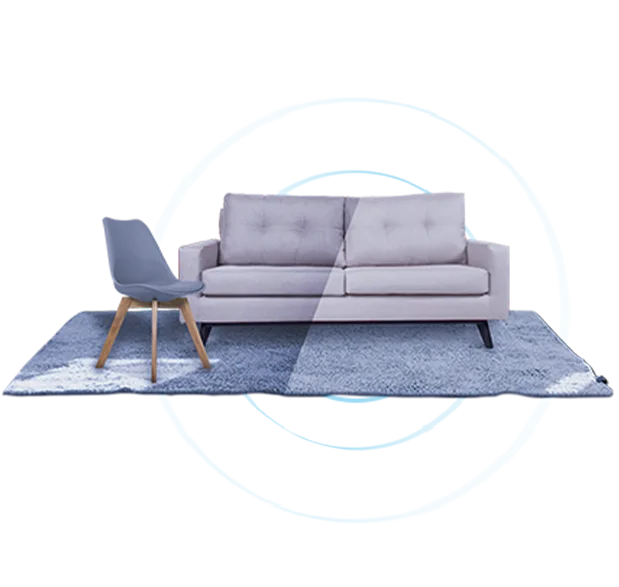
The Benefits of Professional Upholstery Cleaning Services
Convenient
Upholstery, sofas and chairs cleaning right at your home or office
Quality
High quality cleaning service with deep penetration eco-solvent and powerful vacuum machines
Safe
Only pet safe and non-allergic detergents
Warranty
Clear steps of the cleaning process let us guarantee the ultimate purity of upholstery
Have a question?
Book online — we’ll be in touch with you shortly
Pet urine is the one stain that air fresheners and store sprays genuinely cannot fix. The smell comes from uric acid crystals that bond deep inside foam and fibers — masking them with fragrance works for a day, then the odor returns. We remove the source, not the symptom.
Why the smell keeps coming back
When urine dries, it leaves crystals that reactivate with any humidity — that’s why the smell gets stronger on rainy days. Regular detergents don’t dissolve these crystals. The only thing that works is an enzyme treatment: enzymes break the crystals down chemically, and hot-water extraction flushes the residue out of the fabric.
What we treat
- Sofas and couches — accidents on seats, backs and cushions
- Mattresses — including old, repeatedly soaked spots
- Carpets and rugs — marked corners and doorway spots
- Cat-marked armchairs, dog beds’ surrounding upholstery, litter-box areas
Honest expectations
Fresh accidents come out completely — stain and odor. Old spots that soaked through to the foam or carpet backing fade significantly and stop smelling, but a shadow can remain on light fabric. We assess each spot at inspection and tell you the realistic outcome before starting, not after.
Price
Pet treatment is part of a regular cleaning visit from $99 — the enzyme step adds to the price only when there are multiple soaked areas. Text photos of the damage to +1 (631) 829-4082 for an exact quote.
Why pet odor survives ordinary cleaning
Urine is not a soap problem. It is a protein that crystallizes in fabric as it dries, and the uric acid crystals it leaves behind reactivate with humidity — which is why a spot that seemed fine in winter smells again on the first damp day of spring. Detergent lifts the surface residue and leaves the crystals in place. Scrubbing makes it worse by driving the material deeper into the cushion foam and abrading the fiber while it does.
The removal that works has two stages: an enzyme pre-treatment that breaks down the proteins and uric acid chemically, given real dwell time, followed by hot extraction that physically flushes the broken-down material out of the fabric and foam. Enzymes without extraction leave the residue in place; extraction without enzymes rinses around a stain it cannot dissolve. Both together are the whole method, and they are why professional results hold instead of returning in three weeks.
The pet problems we treat
- Urine on sofas, mattresses and carpet — including the accidents you cannot see. Cats in particular mark vertical surfaces and sofa sides, and old spots are frequently found only by smell.
- Vomit and other biological accidents — protein stains that set permanently with heat, which is why hot water is the wrong first instinct.
- The general pet layer. Dander, hair worked into the weave and the oils from a dog that sleeps on the same cushion every night. Lint rollers handle the cosmetic top layer; the layer that produces the smell sits deeper.
- Claw damage and pulled loops. We clean it and tell you honestly what is cleaning and what is upholstery repair — a snagged bouclé loop is a tailoring question, not a cleaning one.
- Post-adoption resets and cleanings before a new baby arrives in a pet household.
Products, and why fragrance-free matters here
Everything we use is organic and pet-safe: animals lick what they lie on, and a household that cares enough to fix the odor does not want harsh residue where the dog sleeps. Fragrance-free is the default rather than an option — a room that has to smell like perfume after cleaning is a room where odor was masked instead of removed, and that masking is what most retail pet sprays actually do.
What to do before we arrive
Blot fresh accidents with dry towels using real pressure, and stop there — no hot water, no scrubbing, no retail spray, because each of those makes the professional job harder. Mark old spots you know about so the technician treats them directly. Secure the pets in another room during the visit: the machine is loud, the door opens repeatedly, and anxious animals are escape artists. Tell us what kind of animal and roughly how long the problem has existed — it changes the enzyme dwell time we plan for.
Pet odor removal FAQ
Is the treatment safe for the pet itself?
Yes — we use organic, non-toxic solutions. The pet can be back on the sofa as soon as it dries, in 2–6 hours.
Can you remove cat urine smell completely?
From fabric and padding — yes, with enzyme treatment. If urine reached wooden frame parts, the wood may need separate sealing; we tell you if that’s the case.
Will the pet stop marking the same spot after cleaning?
Usually yes: pets re-mark where they smell their own scent. Removing the odor at the source removes the trigger — that’s why enzyme treatment matters more than fragrance sprays.
Does it work on old stains?
Odor — almost always. Visible stains fade the older they are; we show you what to expect at inspection.
Can you remove odor from a mattress, or should we replace it?
Most urine-affected mattresses clean successfully, including older accidents. The honest exceptions are saturation through to the core on a foam mattress and anything with visible mold growth — in those cases we say replace rather than take your money.
Will my dog’s smell come back after cleaning?
Removed material does not return. New accidents make new odor, and a pet that has marked a spot once will return to it unless the source is fully removed — which is exactly why enzyme treatment plus extraction matters rather than surface cleaning.
How often should a pet household clean upholstery?
Every six to twelve months for the sofa and the animal’s favourite chair, and immediately after any accident rather than waiting for the next scheduled visit. Waiting is what turns a removable spot into a set one.